
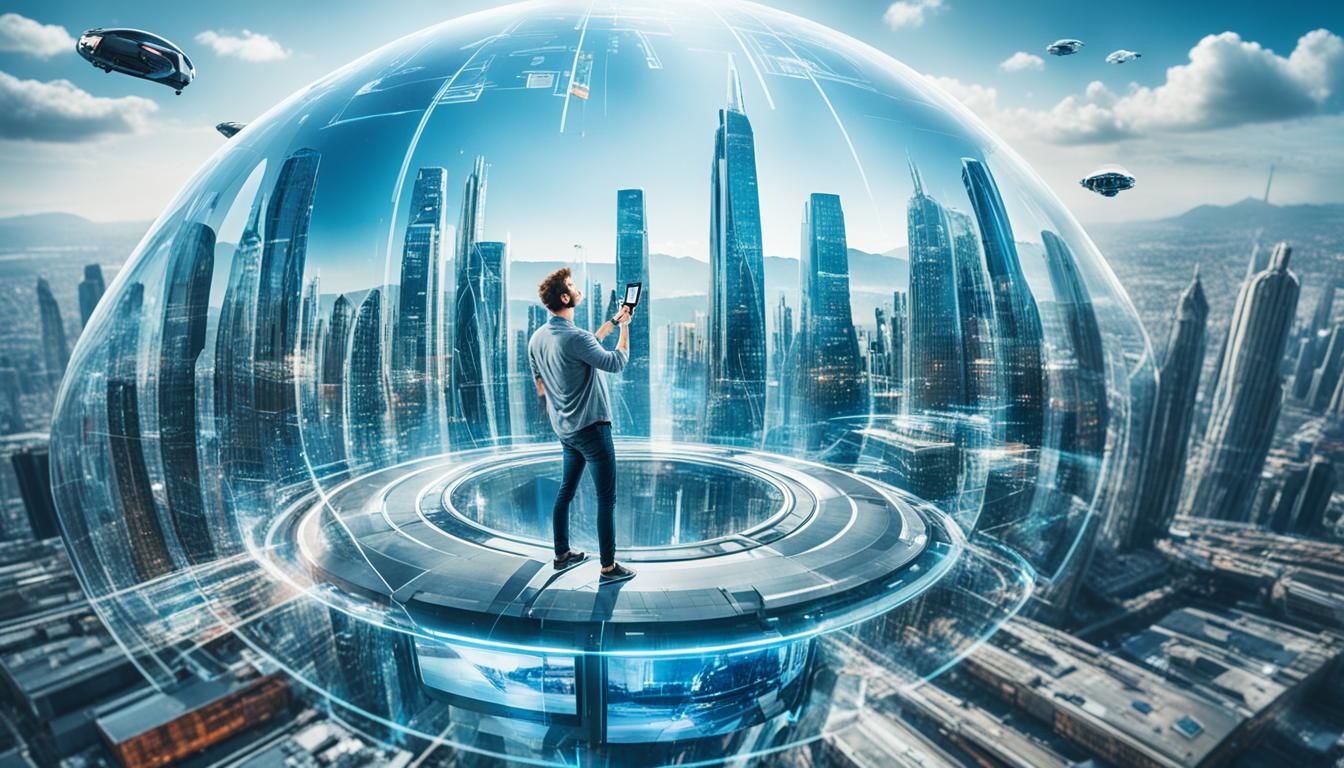
Technology is changing our lives fast, making every part of our lives different. It’s changing how we talk, work, live, and interact. This article will look at how tech is making our future exciting and a bit challenging.
New tech is changing what we thought was possible. Things like artificial intelligence, the Internet of Things, and virtual reality are making big changes. They’re not just changing our lives but also opening new doors for us to explore.
We need to think about the good and bad sides of these changes. We must make sure technology makes our lives better and not worse.
This article will take you on a trip to the future. We’ll see how technology is changing our lives, work, and how we connect with others. From smart cities to new healthcare, the future looks bright. Let’s dive into the world of innovation and see how technology is shaping our future.
Engaging Insights: Exploring the Profound Impact of Technological Advancements
Technology is changing our world fast. It’s bringing big changes to how we work and live. These changes are deep and wide, showing us how tech is making a big mark on our future.
Innovation is at the core of this change. New tech is shaking up many areas, making room for new ideas. Things like AI, the Internet of Things, and new kinds of reality tech are opening doors to new chances and changes.
Looking at the effects of these tech changes, we see big things for our society, economy, and planet. These technologies can make us work better, connect more, and live more efficiently. But, they also bring up big questions about right and wrong, and how we should live together.
By looking closely at how tech is changing us, we can see what’s coming. This exploration helps us understand today and guides us towards a future shaped by tech’s power.
The Age of Artificial Intelligence
We live in a time when artificial intelligence (AI) is changing the world. It’s making new technologies that change how we work and live. At the core, machine learning is a key part of AI. It lets systems learn and get better on their own.
Machine Learning’s Role in Transforming Industries
Machine learning is changing many industries in big ways. It makes things more efficient, brings new ideas, and creates new ways to make money. For example, it helps with things like making product suggestions online and predicting when machines need fixing.
In finance, it helps spot fraud and figure out credit risks. In healthcare, it makes diagnosing and treating patients more accurate and tailored to each person.
Ethical Considerations in AI Development
As AI becomes more common, we must think about its ethical sides. Issues like bias, being clear about how decisions are made, and being responsible are big concerns. This has led to rules to make sure AI is used right and fairly.
Talking between those who make policies, business leaders, and AI experts is key. They work together to make sure AI helps everyone fairly and safely.
The Internet of Things: Interconnected Living
The Internet of Things (IoT) is changing how we live today. It connects smart devices from our homes to cities, changing how we interact with our world. This new era brings our living spaces to life, making them smart and responsive to our needs.

Smart homes show us what the future holds. Picture a home where the temperature adjusts automatically and lights welcome you as you enter. Your appliances work together to save energy, making life easier and greener.
But the IoT’s impact goes beyond our homes. Smart cities are becoming centers of innovation and efficiency. With smart traffic signals and waste management, cities can be cleaner and greener. The IoT opens up endless possibilities for improving our living spaces.
Revolutionizing Healthcare with Technology
The healthcare industry is changing fast, thanks to new tech. Things like telemedicine, personalized medicine, and precision diagnostics are changing healthcare. These new tools are making healthcare better and more efficient.
Telemedicine and Remote Patient Monitoring
Telemedicine is changing the game by letting patients get care at home. Doctors can now talk to patients online and check on them without leaving their house. This is really helpful during the COVID-19 pandemic, keeping patients safe.
Remote patient monitoring is also changing healthcare. It uses devices and sensors to keep track of patients’ health. This lets doctors make care plans that fit each patient’s needs.
Personalized Medicine and Precision Diagnostics
Healthcare is moving towards treating each patient as an individual. This means using their genes, health history, and lifestyle to make treatment plans. It leads to better treatments and lower costs.
Precision diagnostics are key to this new way of treating patients. They help find diseases early and accurately. This means doctors can make better decisions and help patients sooner.
Healthcare technology is making a big difference. It helps patients, improves health outcomes, and makes healthcare more efficient. As technology keeps getting better, we’ll see more changes in how we take care of ourselves.
Smart Cities: The Future of Urban Living
Technology is changing how we live in cities. Smart cities use the latest tech to make living better, greener, and more efficient. They’re changing the future of cities with new infrastructure and energy solutions.
Sustainable Infrastructure and Energy Management
Smart cities focus on sustainable infrastructure to use resources better and lessen harm to the environment. They have smart traffic systems and electric car charging spots. They also use solar and wind power to make energy cleaner and more reliable.
Technology helps manage energy use in smart cities. Systems like smart meters and building automation let people see and control their energy use in real time. This helps everyone use energy wisely, making cities greener.
As more people move to cities, we need new solutions for city life. Smart cities are using tech to make cities better places to live. They’re creating models for the future of urban living.
The Rise of Virtual and Augmented Reality
Technology is changing fast, and virtual reality (VR) and augmented reality (AR) are leading the charge. These technologies are changing how we enjoy entertainment, learn, and even live our daily lives. VR takes us into a fully digital world. AR mixes the real and digital worlds to create new experiences.
VR and AR have huge potential. In entertainment, VR is changing how we play games, watch movies, and go to concerts. You can step into a virtual world and interact with characters or environments. AR adds digital info and fun elements to our real world. You can use AR for directions, games, or trying on virtual clothes before buying.
But VR and AR do more than entertain. They’re changing fields like education, healthcare, and training. Imagine exploring a virtual lab or seeing the human body in 3D. These technologies are making learning fun and interactive. In healthcare, they’re used for pain relief and training doctors, changing medical care.
As VR and AR grow, the possibilities are endless. Whether you’re into gaming, learning, or just keeping up with tech, these immersive technologies will amaze and inspire you.
Quantum Computing: Unlocking New Frontiers
Quantum computing is a game-changer in technology. It’s set to change how we handle data and solve complex problems. This tech uses quantum mechanics to process data much faster than regular computers.
Quantum computers work differently from regular ones. They use the strange rules of tiny particles to do math. This could change the game in areas like secure online communication, material science, and finding new medicines.
The work on quantum computing is moving fast. It could solve problems that regular computers can’t. This means big advances in science and making online communication safer. The future looks bright, with quantum computing set to change tech in big ways.
Cybersecurity in the Digital Age
Our lives are now deeply connected to technology, making strong cybersecurity more important than ever. In today’s world, keeping data safe and private is a big challenge. This is because more devices and online services mean more ways for hackers to attack.
Protecting Data and Privacy in a Connected World
Smart home devices, mobile apps, and cloud services share a lot of our personal info. Cybersecurity experts are always finding new ways to keep our data safe. It’s up to us to use strong passwords, turn on extra security steps, and keep our devices updated.
More devices are connecting to the internet, making our homes and workplaces more vulnerable. We need strong digital security to keep these devices safe. This means making sure they don’t let hackers in and steal our info or mess with important systems.
Working together, tech creators, lawmakers, and security experts will shape the future of cybersecurity. By staying updated, taking steps to protect ourselves, and supporting new security tech, we can feel safer online.
The Future of Work and Automation
Technology is changing the future of work fast. Automation and AI are making big changes in industries, changing jobs, and creating new ones. Workers need to keep learning new skills to keep up with these changes.
Automation is having a big effect on jobs. Many simple tasks are now done by machines, which means some jobs are disappearing. But, this also means skilled workers can use technology to do more complex tasks and get better jobs.
Reskilling and Upskilling for the Jobs of Tomorrow
Workers need to be proactive about learning new skills to keep up with the future. Reskilling means learning new skills for different jobs, and upskilling means getting better at the skills you already have. It’s important to keep learning and getting better at your job to stay ahead in the age of automation.
Governments, schools, and employers all need to help workers get ready for the future. Working together to offer training and learning chances will help workers get the skills they need for new jobs.

The future of work is all about being adaptable and always learning. By taking advantage of new technology and investing in their skills, workers can be ready for the changing job market. This will help them succeed in a world that’s always changing.
Ethical and Social Implications of Technological Progress
Technology is changing fast, and we must think about its good and bad sides. We need ethical tech and responsible innovation to make sure it helps everyone. Issues like data privacy, bias in algorithms, and losing jobs because of tech need careful thought.
Responsible innovation is important for dealing with tech’s social effects. Those making tech should think about the risks and bad outcomes. This way, we can use tech to make life better without harming people.
Data privacy is a big worry in our digital world. We need strong rules to protect our personal info. It’s key to be open and answerable about how we use data to gain trust and make sure tech helps everyone.
Technology also changes jobs and might make some jobs disappear. With more automation and AI, we need to help people learn new skills. Supporting education and helping workers adapt is crucial to share the tech benefits fairly.
Looking at the ethical and social sides of tech helps us use innovation for a better future. Making sure tech helps people and the planet is how we make progress truly valuable.
The Role of Technology in Addressing Global Challenges
Technology is a key player in solving complex global problems. It helps fight climate change and makes healthcare better for everyone. New tech is making our future more sustainable and fair.
Technology is a big help in fighting climate change. Things like solar and wind power are getting better and cheaper. This makes it easier to switch to cleaner energy sources.
Also, electric cars, smart grids, and ways to capture and store carbon are helping. They all work together to cut down on harmful emissions. This helps lessen the bad effects of climate change.
Technology is also changing healthcare for the better. It brings doctors and patients together, even when they’re far apart. This is a big deal for places that don’t have many hospitals.
Also, new medical tech lets doctors treat patients in a more precise way. This means better health outcomes for everyone.