The world of work is changing fast, and the future looks set for big changes. This guide shares 10 key insights on what’s coming. We’ll look at new trends, tech, and innovations that will shape our work lives. Topics include remote work, the gig economy, and the need for new skills and sustainability.
The future of work is a big deal because it affects our careers, skills, and work-life balance. This article aims to give you a deep dive into the workplace trends and work innovations changing the job scene. It’s all about helping you grow in your career and navigate the new workplace technology.
Embracing Remote Work and Hybrid Models
The COVID-19 pandemic made remote work and hybrid models more popular. Companies now see the benefits of these new ways of working. Tools like video conferencing and cloud-based software help remote teams work together smoothly, no matter where they are.
The Rise of Virtual Collaboration Tools
Virtual collaboration tools are key for remote and hybrid work. They let teams talk, share files, and manage projects online. Tools like Zoom, Microsoft Teams, and Google Meet are now common in work. They make it easy to have meetings, edit documents together, and manage projects well.
Redefining the Traditional Office Space
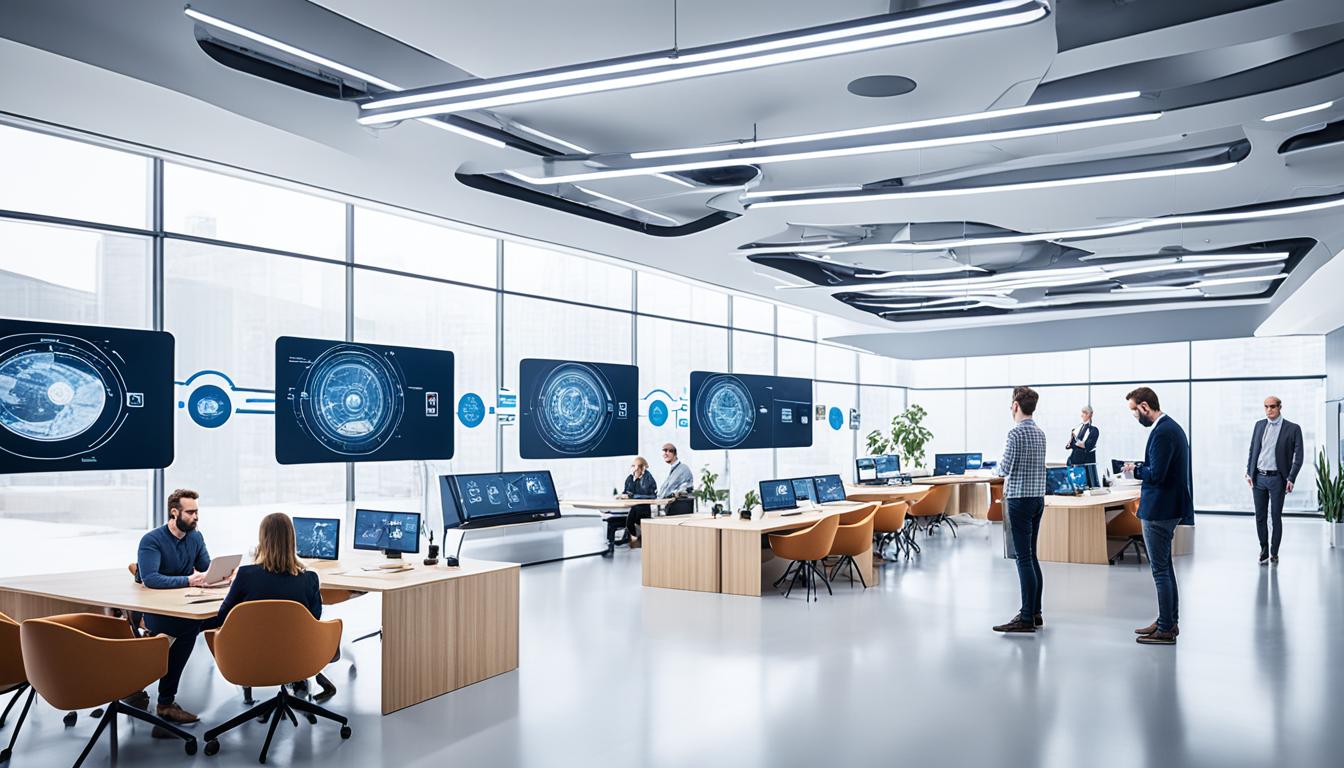
Remote and hybrid work is changing what offices look like. Employers are making offices more flexible and tech-friendly. They want to create spaces that support teamwork, health, and a mix of working from home and in the office.
Companies are updating their offices to fit this new way of working. They’re thinking about how to make their spaces better for everyone.
The Gig Economy and Flexible Work Arrangements
The world of work is changing fast. The gig economy has brought in a new era of flexible work. More professionals are choosing freelance, project-based, and independent contracting roles. They want more control over their work, better work-life balance, and the chance to learn new skills.
Freelancing and independent contracting are popular choices for many. They let people control their careers and work on their own terms. This means they can pick projects and set their own hours. They also get to work with different clients and industries, which helps them grow professionally.
The gig economy has created a new type of worker: the “digital nomads.” These are people who can work from anywhere in the world, thanks to technology. This shift has changed how we view traditional jobs, offering new chances for those who want to make their own way in the workforce.
The gig economy is still growing, and it’s clear that the future of work will focus on flexibility, adaptability, and balancing work and life. Those who adapt to these changes will do well in the changing 21st-century job market.
Upskilling and Reskilling for the Future
In today’s fast-changing job market, adapting and growing is key for both workers and companies. New tech and business models mean we all need to keep learning. Upskilling and reskilling are vital to stay ahead and fill the skills gap.
Upskilling means learning new skills to get better at what we do. Reskilling is about getting new skills for different jobs. Companies are now offering lifelong learning to help workers keep up with business needs and tech changes.
Bridging the Skills Gap with Continuous Learning
Keeping up with education and training is crucial for staying relevant in the job world. By always learning, workers can keep their skills sharp and tackle new challenges. This focus on adapting and improving is key for both personal and career growth.
Learning and developing new skills helps both workers and the workforce as a whole. Companies that support upskilling and reskilling show they care about their employees’ growth. This leads to a culture of constant improvement, which makes workers happier and more likely to stay.
Engaging Insights into Emerging Technologies
Looking ahead, new technologies like artificial intelligence and automation are changing how we work. These innovations automate simple tasks, make workflows smoother, and help with better decision-making in many fields.
Artificial Intelligence and Automation
AI and automation are changing the job scene. AI systems can now do many tasks, from analyzing data to helping with customer service. This lets workers focus on more important and creative tasks. Automation makes routine tasks more efficient, cuts down on mistakes, and boosts productivity.
Companies that use these new technologies are likely to stay ahead in the changing job market.
But, using AI and automation also brings up big questions about jobs and workers. As some tasks get automated, companies need to think about how this affects workers. They should invest in training programs to help workers adapt and learn new skills for the future.
By carefully introducing new technologies and focusing on their workers, companies can use these advancements to drive innovation, get better at what they do, and be ready for the future.
Prioritizing Employee Well-being and Work-Life Balance
In the future of work, companies are focusing more on employee well-being and work-life balance. They know that happy employees are key to success. So, they’re offering strong mental health support and creating a culture that cares for all aspects of their workers’ lives.
Today, a balanced and caring work environment is key to keeping the best workers. With flexible work options like remote jobs and hybrid models, people can handle their work and personal life better. This approach benefits both employees and companies by making the workforce more productive and engaged.
The Importance of Mental Health Support
Companies are also paying more attention to mental health support in the future of work. They’re working to reduce the stigma around mental health issues. By offering resources to deal with stress and anxiety, they help their employees stay mentally healthy.
This focus on mental health makes for a better workplace culture. It shows that the company cares about its workers’ well-being. This leads to happier employees, better productivity, and a lower chance of them leaving the company.
The Future of Leadership and Management
The workplace is changing fast, and so is the role of leaders. They will need to be more collaborative, empathetic, and adaptable. They must empower their teams, encourage open communication, and support a culture of learning and innovation.
Leaders of the future will focus more on inclusivity and teamwork. They’ll move past the old command style. Instead, they’ll give their teams freedom, make them feel like they own their work, and listen to their ideas.
Leaders will also need to be able to change quickly and adjust their plans. Being adaptable, resilient, and open to learning will be key. They should be okay with uncertainty, always be learning, and motivate their teams to do the same.
The future will put a big focus on making employees happy and healthy at work. Leaders who make their workplaces positive and supportive will do well. These leaders will be the ones who make their teams feel important and give them the power to succeed.
Fostering Diversity, Equity, and Inclusion
In today’s work world, diversity, equity, and inclusion (DEI) are key for companies. Smart companies focus on making workplaces where everyone’s unique views and experiences are valued. This approach boosts employee engagement and innovation. It also meets the need for more fair and diverse workplaces.
Building an Inclusive Workplace Culture
Creating an inclusive work culture takes effort. Companies use diversity initiatives to draw in and keep a diverse team. They improve hiring and offer training to help underrepresented groups. They also encourage open talks, bias training, and allyship to make sure everyone feels important and valued.

Putting DEI first in the workplace has big benefits. Studies reveal that diverse teams are more creative, productive, and ready for today’s business challenges. By valuing diversity, equity, and inclusion, companies tap into a vast pool of talent and ideas. This helps them stay ahead in a changing work world.
Sustainability and Corporate Social Responsibility
The future of work is changing, making sustainability and corporate social responsibility key for companies. Now, employees, customers, and stakeholders look at a company’s impact on the environment and society. They want businesses to use eco-friendly methods and help their communities.
It’s important for companies to put sustainability and CSR at the heart of their work. This helps them stay competitive and match the values of today’s workforce. By focusing on sustainable work practices and social responsibility, companies can lessen their environmental harm. They can also build a good reputation, draw in the best talent, and connect better with their stakeholders.
Companies that focus on sustainability and CSR use energy-saving solutions and cut down on waste. They also support local groups and invest in programs for employee health. These efforts help companies do well in the future. By showing they care for the environment and society, they stand out. They boost their brand value and help make the future of work more sustainable and fair.
The Impact of Globalization and Cross-Cultural Collaboration
The world is getting more connected, changing the future of work. People now work in a world full of cultural differences and international teams. They need to be good at understanding different cultures and working together well.
Globalization brings new chances for businesses to grow and find talented people from all over. Teams now have people from many places, each with their own views and stories. To make the most of this, workers must learn to value and understand different cultures and ways of talking.
Working well with people from other cultures is key to making new ideas and doing well in today’s work world. By overcoming cultural barriers and using different ideas, teams can come up with creative solutions and grow. Being able to handle the challenges of working globally will be very important for those who want to do well in the future.
As companies reach out to more parts of the world, knowing about different cultures is more vital. People who can adjust to new cultures, talk well, and make strong connections with others from different backgrounds will do well. Getting ready for the changes brought by globalization and working together across cultures is key for the future of work.
Data-Driven Decision Making and People Analytics
The future of work is changing fast, thanks to data-driven decisions and people analytics. Smart companies use advanced HR tech to understand their workers better. This way, they can make better choices, improve employee experiences, and stay flexible for new business needs.
Leveraging Data for Workforce Optimization
Data analytics and people analytics are changing how companies plan for the future, manage talent, and keep employees happy. With HR tech, companies can collect and analyze lots of data. This includes things like how well employees do their jobs, how long they stay, and if they’re happy.
This data helps leaders make smarter choices, spot areas to get better, and improve how they manage their teams. By using data and people analytics, companies can stay ahead in a fast-changing work world. They can make sure they have the right people in the right jobs to help their business grow and succeed.

The Role of Creativity and Innovation in the Future Workplace
The pace of change is speeding up, making creative and innovative thinking more important in the future workplace. Companies that support creativity and encourage new ideas will do well. They will be ready for the future.
Helping employees use their creativity will be key to success. It will help businesses stay ahead and keep their edge.
In the future, solving problems will need more creativity and new ideas. Workers who can see things from new angles and come up with fresh solutions will be wanted. It’s important for companies to value creativity and innovation to stay ahead.
The future of work will also depend on handling uncertainty. Those who can think creatively and adjust quickly will do better. Companies that focus on creativity and innovation will find new ways to succeed and stay flexible in changing markets.