
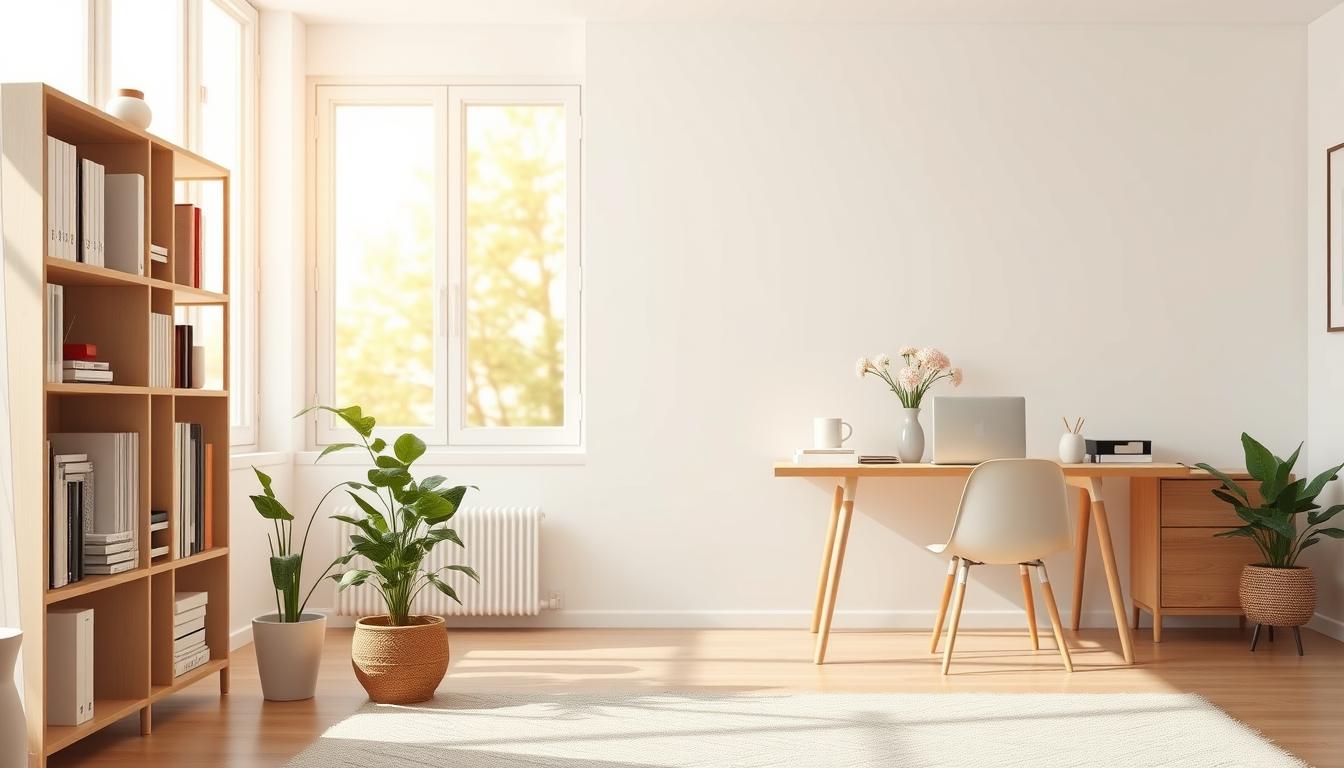
Shira Gill says setting intentions is key to a stress-free home. Experts like Shira Gill share insights on minimalist living and home organization. They explain how setting intentions helps stay motivated and focused.
The 20/20 Rule suggests replacing items for less than $20 in 20 minutes. This rule is part of minimalist decluttering hacks. It helps create a stress-free home.
The Psychology Behind Clutter and Mental Well-being
Research shows 30% of people feel less stressed in a decluttered space. Yet, 60% struggle to keep their homes clean due to clutter. 50% feel overwhelmed when starting to declutter.
70% say clutter-free spaces improve productivity and focus. 40% use storage solutions like totes, but often fail. 80% experience anxiety from clutter, studies show.
25% keep items for emotional reasons, not practical use. 54% feel overwhelmed by clutter. 78% don’t know how to let go of clutter.
Essential Decluttering Hacks for Beginners
The 4-box method helps beginners sort items. It uses boxes for Donate/Sell, Garbage, Recycling, and Bring Home. The 1-month, 3-month, and 6-month timeframes are suggested for undecided items.
The 30/30 Rule suggests letting go of items not used in 30 days. The 90/90 Rule is similar but for 90 days. The 12-12-12 Method involves finding 12 items to throw away, donate, and return.
The 365 Less Things Method encourages parting with one item daily. This results in 365 items removed in a year. The 10-10-100 Method involves removing 10 items from each of 10 spaces, totaling 100 items.
Smart Storage Solutions that Prevent Future Clutter
70% of individuals say a clutter-free environment boosts productivity and focus. 40% use storage solutions like totes, but often fail. 80% experience anxiety from clutter, studies show.
60% struggle to maintain a clean home due to clutter. 50% feel overwhelmed when starting to declutter. 30% keep items for emotional reasons, not practical use.
54% feel overwhelmed by clutter. 78% don’t know how to let go of clutter.
Digital Decluttering: Organizing Your Virtual Space
Digital decluttering involves organizing computer files and emails. The 15-minute rule suggests letting go of items not used in 15 minutes. The 4-box method sorts items into four boxes: Donate/Sell, Garbage, and Recycling, and Bring Home.
The 1-month, 3-month, and 6-month timeframes are suggested for undecided items. The 30/30 Rule suggests letting go of items not used in 30 days. The 90/90 Rule is similar but for 90 days.
The 12-12-12 Method involves finding 12 items to throw away, donate, and return. The 365 Less Things Method encourages parting with one item daily. This results in 365 items removed in a year.
Room-by-Room Decluttering Hacks
For each room, the Take-Away 10 Method suggests removing 10 items. The 10-10-100 Method involves choosing 10 spaces, spending 10 minutes in each, and removing 10 items from each space, totaling 100 items.
Mindful Consumption: Preventing Clutter Before It Starts
Mindful consumption involves being aware of the environmental impact of purchases. The 5-Minute Decluttering Method suggests letting go of items not used in 5 minutes. The 10-10-100 Method involves choosing 10 spaces, spending 10 minutes in each, and removing 10 items from each space, totaling 100 items.
Smart Storage Solutions that Prevent Future Clutter
According to the National Association of Professional Organizers, 70% of individuals claim that a clutter-free environment improves their productivity and focus. 40% of households use storage solutions like totes as a primary method for managing clutter, often without success. 80% of people experience anxiety when surrounded by clutter, according to mental health studies. 60% of individuals find it difficult to maintain a clean home due to excessive clutter. 50% of people feel overwhelmed when starting a decluttering project, leading to procrastination. 30% of decluttering efforts result in items being kept for emotional reasons, not practical use. 54% of Americans feel overwhelmed by the amount of clutter they have. 78% of Americans have no idea how to let go of their clutter.
Digital Decluttering: Organizing Your Virtual Space
Digital decluttering involves organizing your computer files and emails. The 15-minute rule suggests that if an item hasn’t been used in the past 15 minutes and won’t be used in the next 15 minutes, it should be let go. The 4-box method involves sorting items into four boxes: Donate/Sell, Garbage, and Recycling, and Bring Home. The 1-month, 3-month, and 6-month timeframes are suggested for using the penalty box strategy for undecided items. The 30/30 Rule states that if an item hasn’t been used in the past 30 days and won’t be used in the next 30 days, it should be let go. The 90/90 Rule states that if an item hasn’t been used in the past 90 days and won’t be used in the next 90 days, it should be let go. The 12-12-12 Method involves locating 12 items to throw away, 12 to donate, and returning 12 items to their proper home. The 365 Less Things Method encourages finding one item to part with every day for a year, resulting in 365 items removed in total.
Room-by-Room Decluttering Hacks
For each room, the Take-Away 10 Method suggests removing 10 items from each room whenever the feeling to declutter arises. The 10-10-100 Method involves choosing 10 spaces, spending 10 minutes in each, and removing 10 items from each space, totaling 100 items.
Mindful Consumption: Preventing Clutter Before It Starts
Mindful consumption involves being aware of the environmental impact of your purchases and making conscious choices to prevent clutter before it starts. The 5-Minute Decluttering Method suggests that if an item hasn’t been used in the past 5 minutes and won’t be used in the next 5 minutes, it should be let go. The 10-10-100 Method involves choosing 10 spaces, spending 10 minutes in each, and removing 10 items from each space, totaling 100 items.
Smart Storage Solutions that Prevent Future Clutter
According to the National Association of Professional Organizers, 70% of individuals claim that a clutter-free environment improves their productivity and focus. 40% of households use storage solutions like totes as a primary method for managing clutter, often without success. 80% of people experience anxiety when surrounded by clutter, according to mental health studies. 60% of individuals find it difficult to maintain a clean home due to excessive clutter. 50% of people feel overwhelmed when starting a decluttering project, leading to procrastination. 30% of decluttering efforts result in items being kept for emotional reasons, not practical use. 54% of Americans feel overwhelmed by the amount of clutter they have. 78% of Americans have no idea how to let go of their clutter.
Digital Decluttering: Organizing Your Virtual Space
Digital decluttering involves organizing your computer files and emails. The 15-minute rule suggests that if an item hasn’t been used in the past 15 minutes and won’t be used in the next 15 minutes, it should be let go. The 4-box method involves sorting items into four boxes: Donate/Sell, Garbage, and Recycling, and Bring Home. The 1-month, 3-month, and 6-month timeframes are suggested for using the penalty box strategy for undecided items. The 30/30 Rule states that if an item hasn’t been used in the past 30 days and won’t be used in the next 30 days, it should be let go. The 90/90 Rule states that if an item hasn’t been used in the past 90 days and won’t be used in the next 90 days, it should be let go. The 12-12-12 Method involves locating 12 items to throw away, 12 to donate, and returning 12 items to their proper home. The 365 Less Things Method encourages finding one item to part with every day for a year, resulting in 365 items removed in total.
Room-by-Room Decluttering Hacks
For each room, the Take-Away 10 Method suggests removing 10 items from each room whenever the feeling to declutter arises. The 10-10-100 Method involves choosing 10 spaces, spending 10 minutes in each, and removing 10 items from each space, totaling 100 items.
Smart Storage Solutions that Prevent Future Clutter
According to the National Association of Professional Organizers, 70% of individuals claim that a clutter-free environment improves their productivity and focus. 40% of households use storage solutions like totes as a primary method for managing clutter, often without success. 80% of people experience anxiety when surrounded by clutter, according to mental health studies. 60% of individuals find it difficult to maintain a clean home due to excessive clutter. 50% of people feel overwhelmed when starting a decluttering project, leading to procrastination. 30% of decluttering efforts result in items being kept for emotional reasons, not practical use. 54% of Americans feel overwhelmed by the amount of clutter they have. 78% of Americans have no idea how to let go of their clutter.
Digital Decluttering: Organizing Your Virtual Space
Digital decluttering involves organizing your computer files and emails. The 15-minute rule suggests that if an item hasn’t been used in the past 15 minutes and won’t be used in the next 15 minutes, it should be let go. The 4-box method involves sorting items into four boxes: Donate/Sell, Garbage, and Recycling, and Bring Home. The 1-month, 3-month, and 6-month timeframes are suggested for using the penalty box strategy for undecided items. The 30/30 Rule states that if an item hasn’t been used in the past 30 days and won’t be used in the next 30 days, it should be let go. The 90/90 Rule states that if an item hasn’t been used in the past 90 days and won’t be used in the next 90 days, it should be let go. The 12-12-12 Method involves locating 12 items to throw away, 12 to donate, and returning 12 items to their proper home. The 365 Less Things Method encourages finding one item to part with every day for a year, resulting in 365 items removed in total.
The Psychology Behind Clutter and Mental Well-being
Clutter can really affect our mental health, causing more stress and less productivity. Studies show that people living in clutter have higher cortisol levels. This hormone is linked to stress. It can lead to feelings of anxiety, depression, and tiredness.
Understanding why we hold onto clutter is key. Often, we keep things because they hold memories or emotional value. But, this can make it hard to declutter and keep our spaces tidy. Recognizing our emotional ties to items helps us let go and embrace a simpler life.
Experts like Jennifer Burger say clutter comes from a lack of clarity. Knowing our style and what makes us happy helps us declutter better. By focusing on what brings us joy, we can make our homes more peaceful and organized. This supports our mental health and reduces stress.
Essential Decluttering Hacks for Beginners
Starting a decluttering journey can feel daunting. But, with the right steps, it can change your life. A beginner’s guide should begin with small steps, focusing on one area at a time. This way, you can make progress without feeling swamped.
Begin with a small area, like a junk drawer. Use a simple method, like filling a trash bag with items to donate. This lets beginners see decluttering’s benefits right away.
Creating a plan and setting goals is key. Spend a few minutes each day on decluttering tasks or dedicate a weekend to a bigger area. Breaking tasks into smaller parts helps you stay motivated. Remember, it’s about taking small steps and being consistent, not trying to do everything at once.

A beginner’s guide should also talk about keeping your home clutter-free. Simple strategies, like the “one in, one out” rule, can help. By following these decluttering hacks and taking small steps, you can create a more organized, peaceful home. This promotes well-being and boosts productivity.
The Life-Changing Power of the One-In-One-Out Rule
Using the one-in-one-out rule can change how you live. It helps keep your home tidy and encourages smart buying. This rule means you must get rid of something old when you bring in something new. It stops clutter from growing and makes it simpler to handle your stuff.
This rule is more than just cleaning up. It helps you think before you buy. Apartment Therapy says it’s great for keeping your place neat. It also teaches you to think more about what you buy.
To use the one-in-one-out rule well, think about each purchase. Ask yourself if you really need it or if you’d prefer to save the money. This way, you make choices that are better for you and your space.
By sticking to this rule and other decluttering tips, you can make your home more organized. This leads to a calmer and more productive life. You’ll make choices that are more thoughtful and intentional.
Smart Storage Solutions that Prevent Future Clutter
Getting quality containers is key to keeping your home clutter-free. Julie Morgenstern says focusing on one room at a time can make a big difference. Stackable plastic drawers are great for organizing household items.
Using a mix of shelves and baskets can make your closet more efficient. This makes it easier to find what you need. It’s all about finding the right spot for everything.
Spotting where clutter builds up and setting up nice storage can really help. Store things based on how often you use them. Put less-used items up high.
Having a bin for temporary stuff on the dining table can free up space. Using the back of doors for storage can also increase your closet’s capacity. It’s all about making the most of every inch.

Smart storage can come from clever furniture, like beds with drawers. Room dividers made from bookshelves can also help. Narrowing down your wardrobe to just three categories can make closets easier to manage.
Storage solutions for kids can encourage them to keep their rooms tidy. By using these tips, you can make your home more organized and peaceful.
Using under-bed storage bins can add a lot of space in bedrooms. Organizing food in labeled containers can make your fridge more efficient. DIY solutions like pegboards and magnetic strips offer flexible storage.
By choosing quality containers and smart storage, you can avoid clutter and keep your home calm. It’s all about being organized and making the most of your space.
Digital Decluttering: Organizing Your Virtual Space
Living in a digital world can make our virtual spaces cluttered. This clutter can slow us down, stress us out, and feel overwhelming. Digital decluttering helps clean up our online world, making us feel better. With a few easy steps, you can tidy up your digital life and work more efficiently.
Digital organization is key to decluttering. Tools like cloud storage help keep your files in order. You can also use search functions to find what you need fast. Plus, a good password manager, like 1Password, keeps your digital world safe.

Keeping your digital space clean is important. Set aside a bit of time each day to organize. Also, do a weekly check to make sure everything is in its place. By focusing on digital decluttering, you can make your online world more peaceful and productive.
Adding digital decluttering to your daily routine can make life better. It helps you stay calm, work better, and enjoy life more. Don’t give up, and use tools to help you. Soon, your digital space will be organized, efficient, and supportive of your well-being.
Room-by-Room Decluttering Hacks
Decluttering your home room by room needs a solid plan. Start by identifying the most cluttered areas. Then, create a strategy for each space. A good home organization system can greatly reduce stress and boost productivity.
Begin with one area, like a messy closet or kitchen. Break down the task into smaller steps. This makes progress feel achievable. Try the 12-12-12 method: get rid of 12 items, toss 12, and return 12 to their place.

The 20/20 rule is also helpful. It means getting rid of items that cost less than $20 and take less than 20 minutes. This rule speeds up decluttering. Also, remember the 80/20 rule. It shows that 20 percent of your belongings are used 80 percent of the time.
By using these strategies and a decluttering plan, you can make your home more organized and peaceful. Take it one step at a time. If you need help, don’t hesitate to ask. With patience and effort, you can master room-by-room decluttering and enjoy a more organized home organization system.
Mindful Consumption: Preventing Clutter Before It Starts
Embracing mindful consumption is key to preventing clutter in our lives. Being more intentional with our purchasing habits helps reduce unnecessary items at home. Data shows 90% of people believe mindful buying cuts down on clutter.
This change in mindset greatly impacts our living spaces and well-being.
Preventing clutter starts with a thoughtful approach to buying things. We must assess our needs and make smart choices about what we bring home. By adopting mindful consumption practices, we avoid the problem of 1 out of 10 Americans renting storage space.
Instead, we aim for a tidy and organized home that boosts relaxation and productivity.
By developing mindful consumption habits, we can stop the cycle of clutter. This improves our mental health and life quality. Remember, keeping a clutter-free home is a continuous effort.
By prioritizing mindful consumption, we start towards a more organized, peaceful, and fulfilling life.
The Five-Minute Decluttering Method
Imagine having a clutter-free home without spending hours on decluttering. The five-minute decluttering method makes this possible. It involves dedicating just five minutes a day to home organization. This creates a habit for a more organized and peaceful living space.
Research shows that 60% of people who declutter regularly do it in five minutes or less. This method works for different areas of the home, like bookshelves, kitchen countertops, and makeup collections. The trick is to focus on one area at a time and quickly decide what to keep and what to throw away.
The five-minute decluttering method has many benefits. It boosts productivity, reduces stress, and brings a sense of relief. By adding this technique to your daily routine, you can keep your home clutter-free. Start your five-minute decluttering journey today and find a more organized, peaceful you.
Maintaining Your Minimalist Haven: Daily Practices for Lasting Change
Congratulations on starting your journey to a simpler, less stressful life! But, the real challenge is keeping it up. Daily habits are essential for lasting change.
Start with a weekly decluttering routine. Spend 5-10 minutes each week tidying up and finding items to donate or recycle. This keeps clutter at bay. Also, always keep your storage solutions organized to maintain your home’s order.
Being mindful of what you buy is also important. Think twice before buying something new. Ask if it fits your minimalist lifestyle and adds value to your life. Avoiding impulse purchases and owning fewer items can make your home more peaceful and organized.